
Education
This is where we share what we’ve done and what we’ve learned. We hope it inspires you. If you need us, give us a call.
Restoration Project | Fernwood
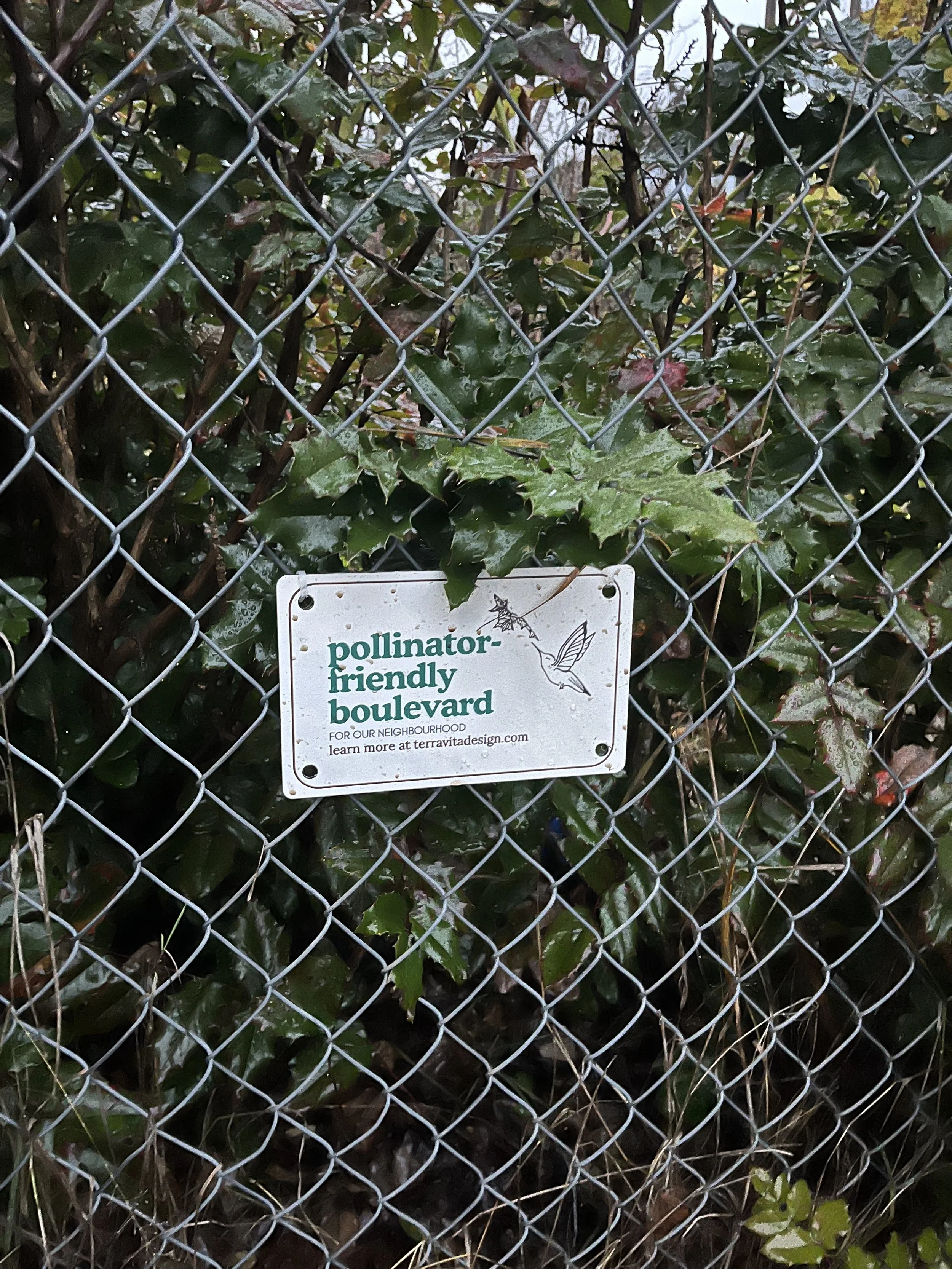
Pollinator-Friendly Boulevard Garden
We transformed the boulevard adjacent to our headquarters into a drought-resilient pollinator garden, designed for local pollinators and for the people who pass by every day. Learn more below.
About the project — A boulevard
reimagined.
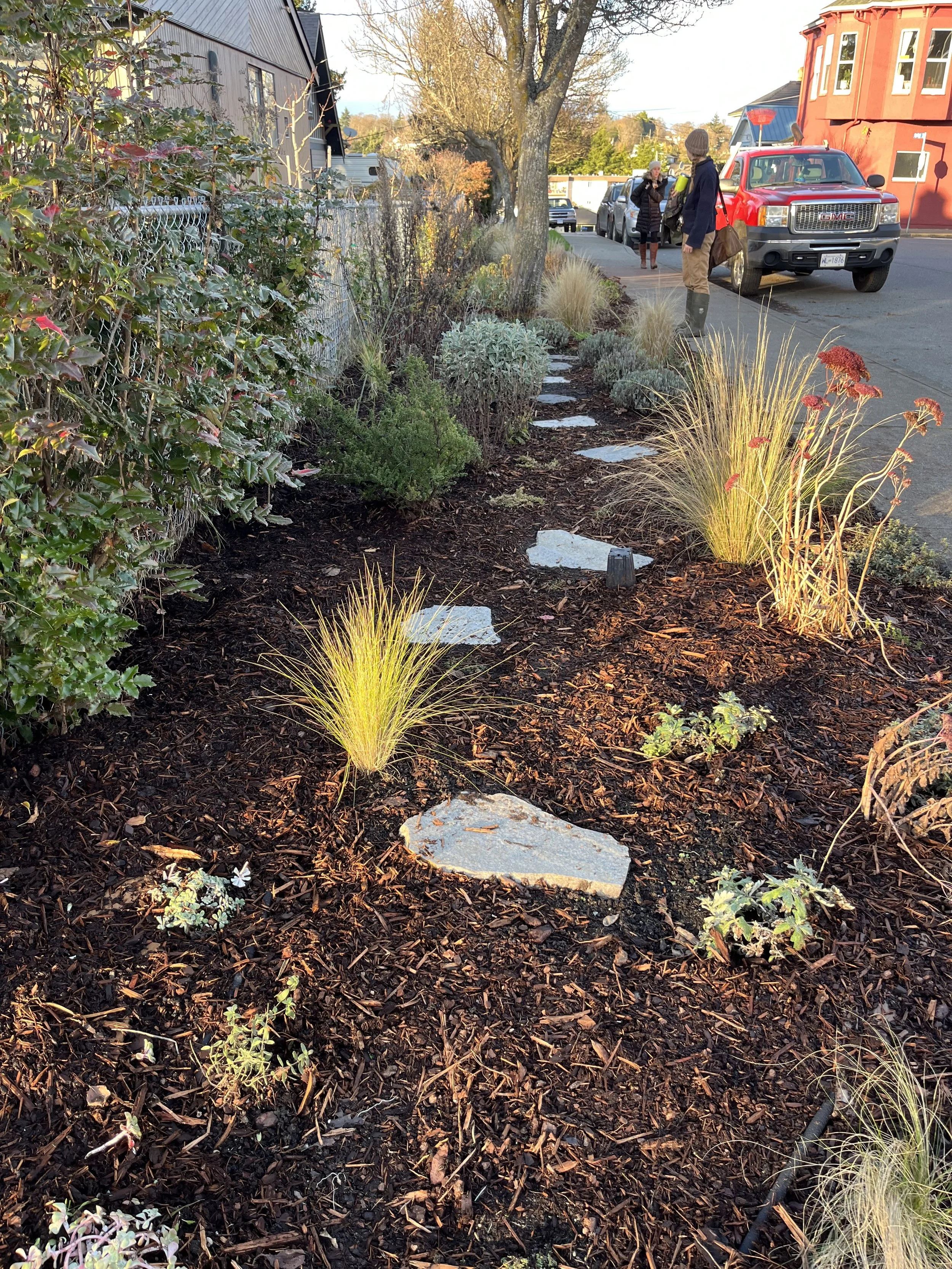
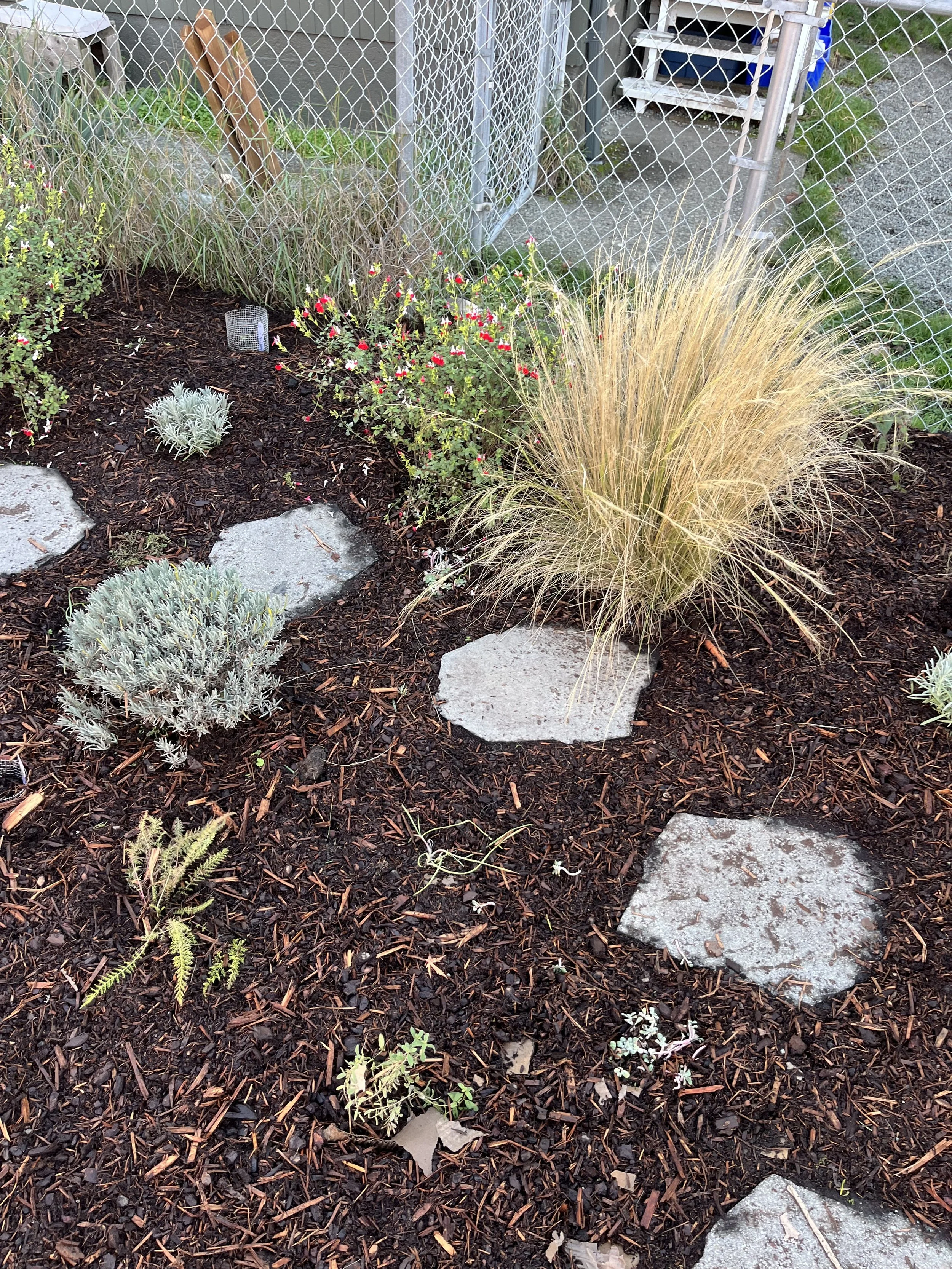
The boulevard at Spring Rd & Princess Ave is 2.7 m wide, 21 m long, south-facing, and exposed to full sun all day. It's a busy corner with neighbours, kids, and commuters walking by daily.
Over the years, the boulevard became overcrowded with unwanted bullies like speargrass and couchgrass, and multiple seasons of drought had taken their toll. The space was underutilized and no longer served its purpose of connecting people with plants.
In fall 2025, Terra Vita partnered with the University of Victoria’s restoration program and student Sarah Mains to give the boulevard garden a new purpose: a drought-resilient, pollinator-friendly garden that's ecologically functional, beautiful, and inviting for the neighbourhood to enjoy.
Today, over 30 species bloom here from February through November. A flagstone path winds through the garden so you can step in and look closely. Bare soil, bunchgrasses, and a pollinator house offer nesting habitat for local bees. This page is an invitation to learn from and engage with this garden.
At a glance —
Location: Spring Rd & Princess Ave
Installed: Fall 2024
Size: 55 m² · 2.7m × 21m
Exposure: South-facing, full sun
Bloom Season: February – November
Plant Species: 30+
Why it matters
Less than 5% of BC's Garry oak meadows remain in near-natural condition. Every planted boulevard is a small corridor in a larger network pollinators can move through.
The bigger picture —
Small spaces.
Real impact.
Greater Victoria sits within the Eastern Vancouver Island ecoregion, home to Garry oak meadows that support the highest plant diversity on the BC coast. The native bees, butterflies, and hoverflies that depend on them are under pressure from habitat loss, pesticide use, and the spread of monoculture lawns that offer little ecological function.
Boulevards are small, but they are everywhere. When planted with intention, they stop being dead space and start functioning as corridors, linking parks, gardens, and natural areas into a network that pollinators can move through.
The pollinators —
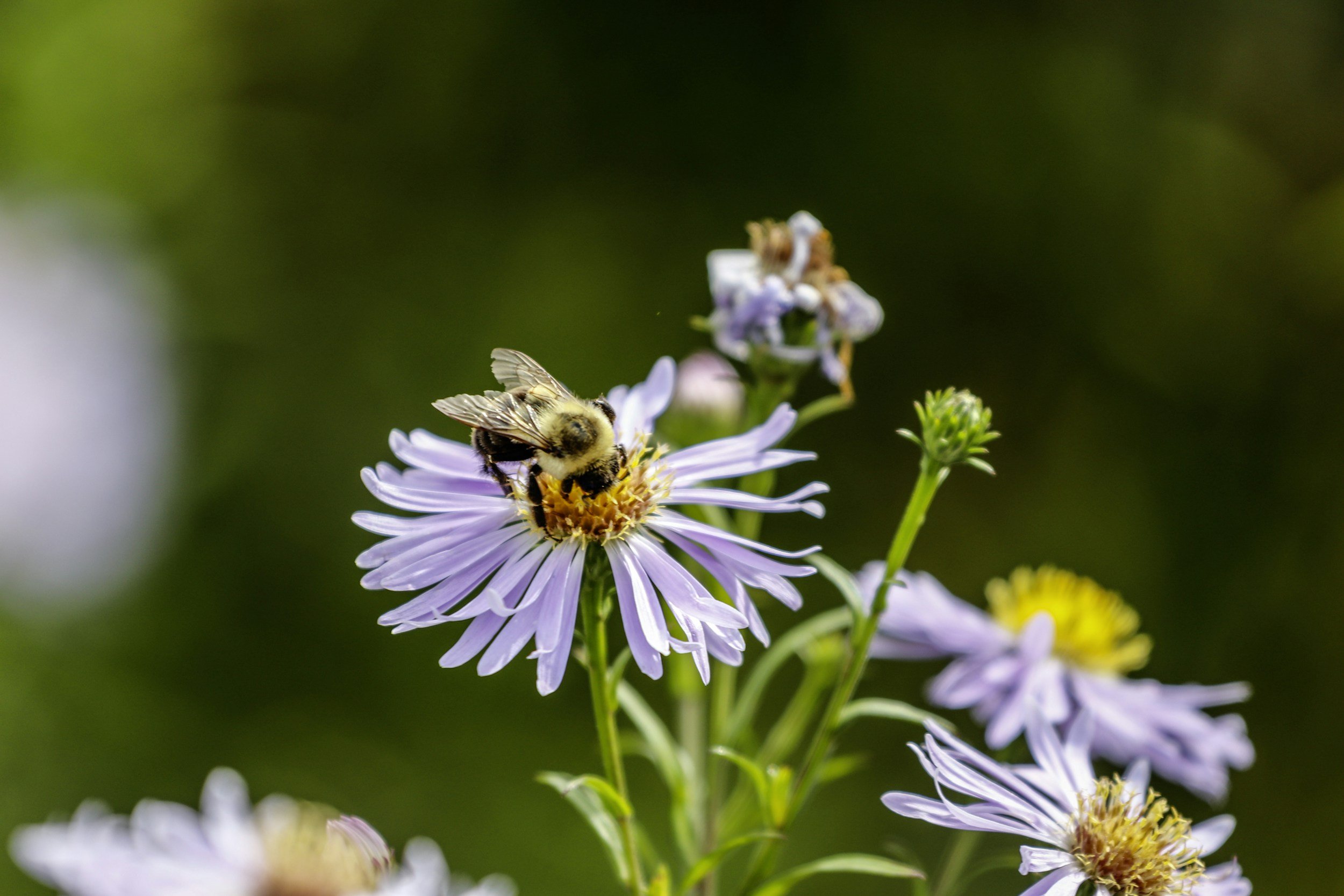
Bumblebees & Native Bees
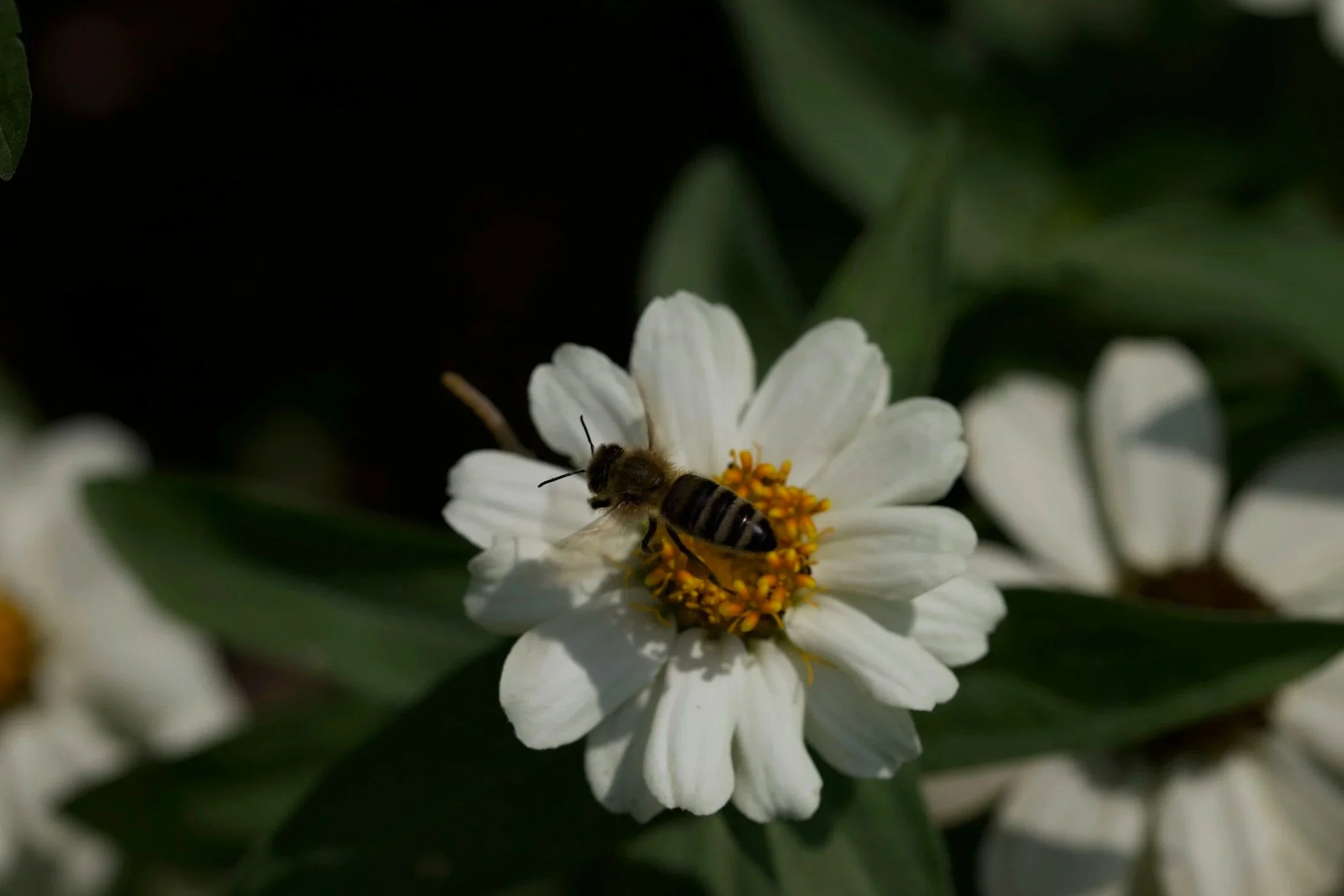
BC is home to nearly 500 native bee species, most of them solitary, nesting in bare soil, hollow stems, or small cavities. The bare soil, bunchgrasses, and pollinator house here provide nesting habitat, while salvia, lavender, and rose offer reliable sources of nectar and pollen.
Hummingbirds
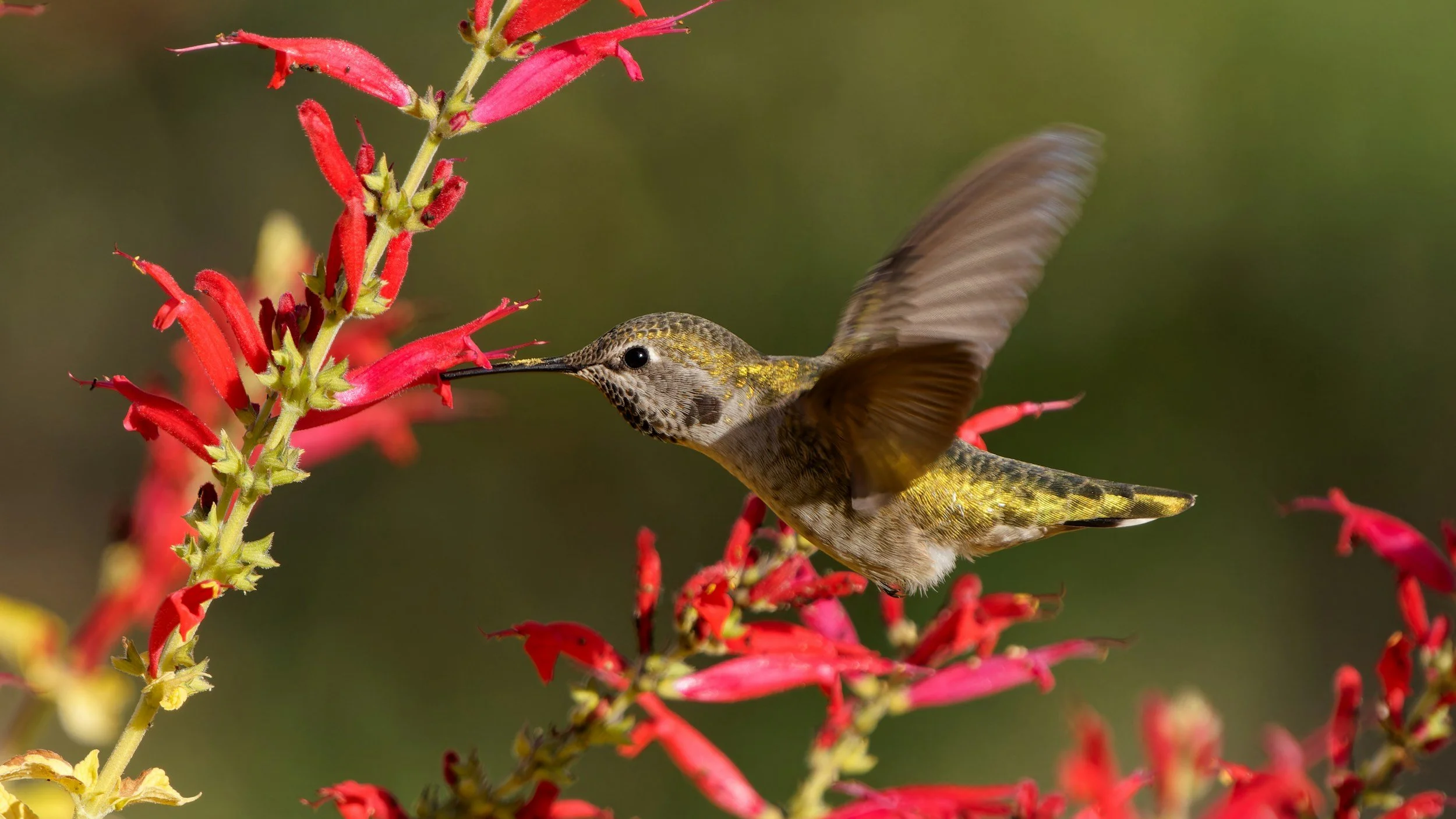
Greater Victoria is home to both the Rufous Hummingbird, (spring visitor), and the Anna's Hummingbird (year-round resident). Both are drawn to tubular blooms: nootka rose, hot lips salvia, and nodding onion.
A three-year UBC study across 18 Vancouver parks found that converting turfgrass to pollinator meadow added 21 to 47 new wild bee and hoverfly species per site.
"You don't need a lot of space or resources to make a difference."
— Jens Ulrich, lead researcher, University of British Columbia, 2025
Hoverflies
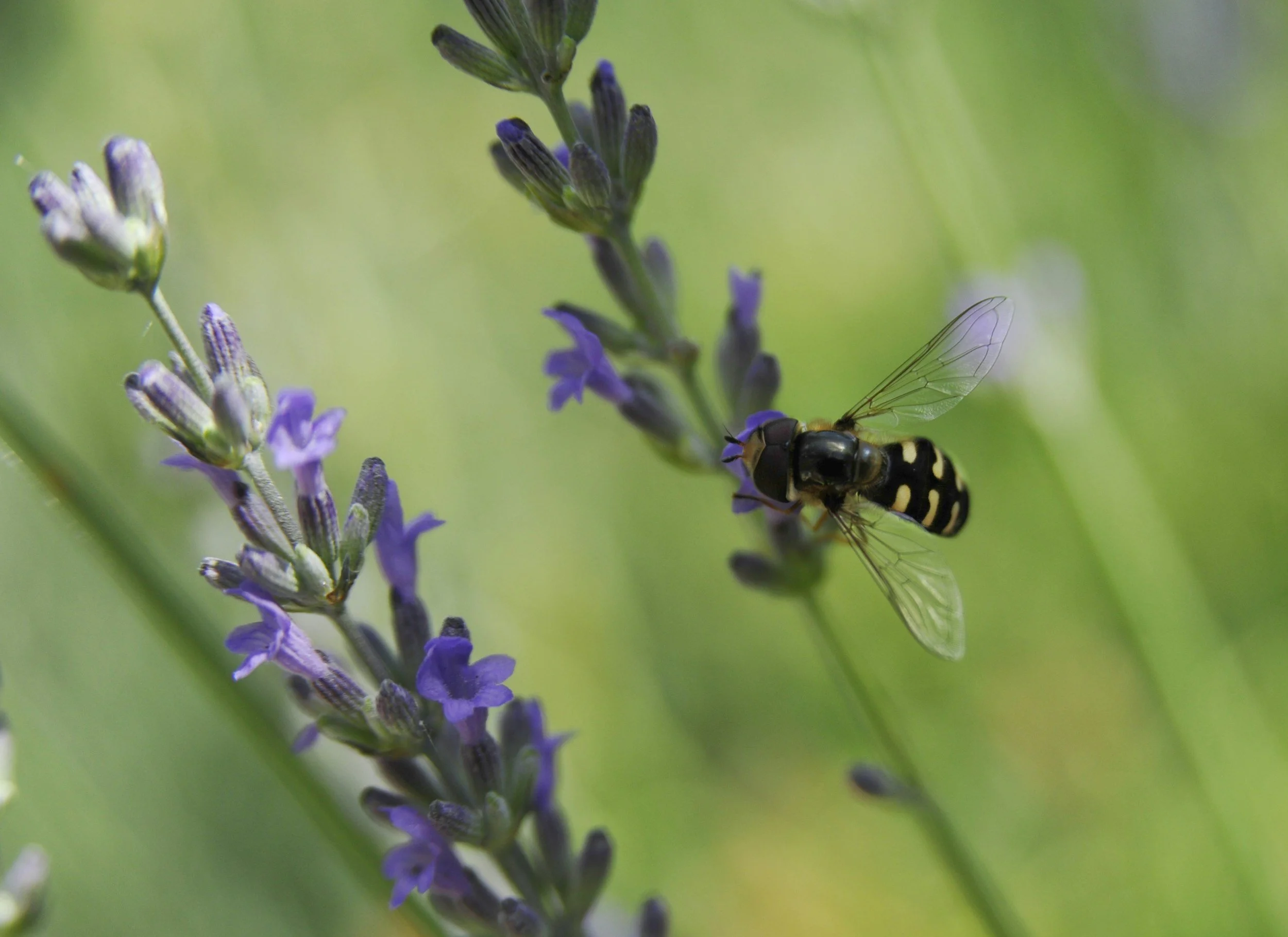
Easy to mistake for bees, hoverflies are among the most important pollinators of wildflowers and a constant presence on the yarrow all summer. Their larvae are also voracious aphid-eaters, making them as useful as they are charming. Look for them hovering over open-faced blooms on sunny days.
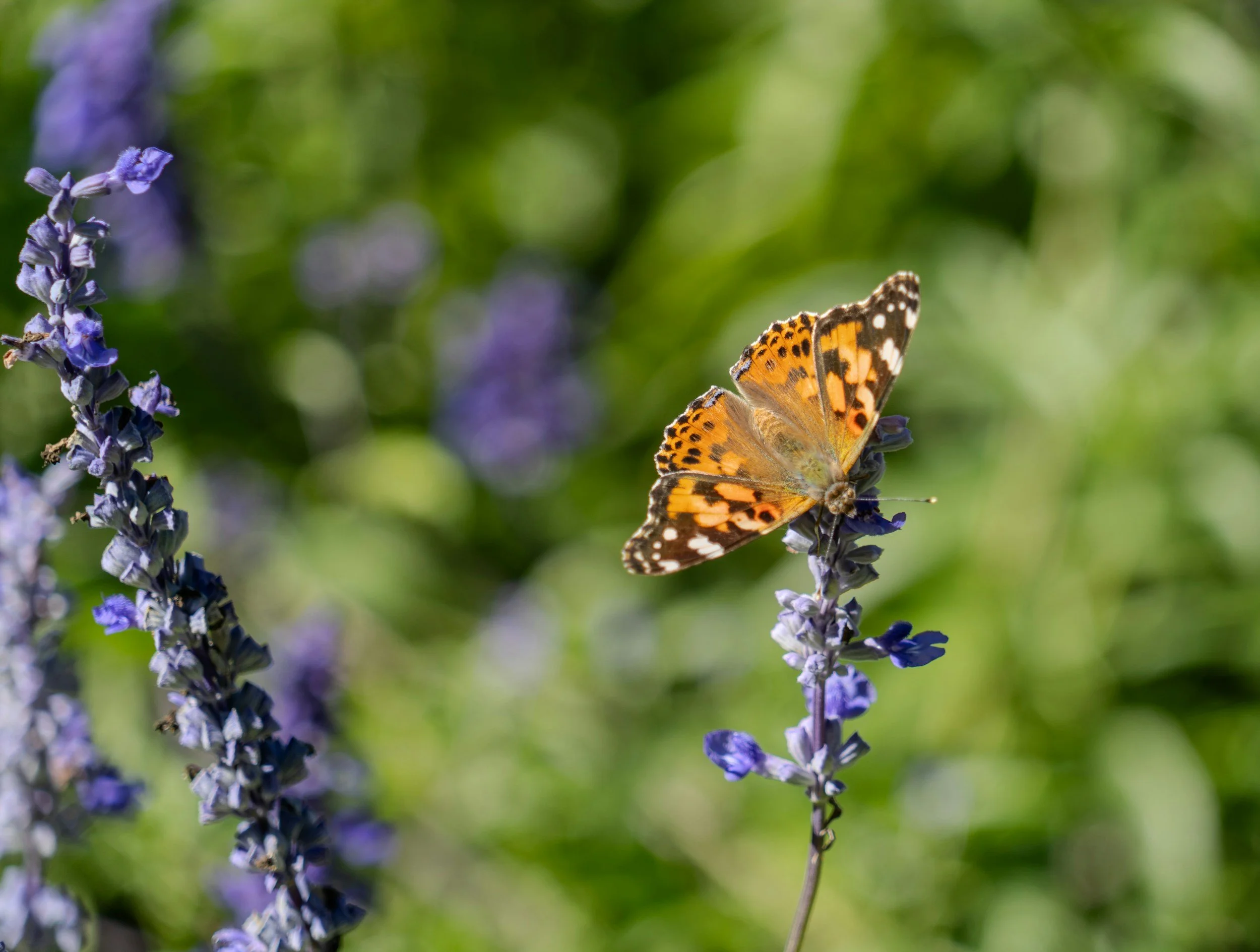
Butterflies & Moths
BC has the greatest butterfly diversity in Canada, 187 known species. Yarrow and pearly everlasting offer warm, flat-topped blooms for basking. After dark, moths take over, drawn to pale blooms and sweet fragrance.
Bloom calendar —
Something in bloom,
every season.
One guiding principle of the design was continuity, ensuring pollinators have a reliable food source from early spring through late fall. Here's what's flowering when.
-
March through May — The season opens with bulbs and early natives emerging beneath the Prunus tree - a tree that while modern has become an iconic symbol of spring for Victoria. These are some of the most important blooms of the year as early-season bees are hungry after winter.
Common Camas (Camassia quamash)
Deep blue-violet spikes; a traditional food source significant to lək̓ʷəŋən peoples.
Satinflower (Olsynium douglasii)
One of the first native wildflowers to bloom on southern Vancouver Island — sometimes as early as February.
Broad-leaved Shootingstar (Primula hendersonii)
Magenta blooms shaped to receive only one pollinator: the native bumblebee.
Oregon-grape (Mahonia aquifolium)
Striking yellow flowers and year-round evergreen structure; native to Vancouver Island.
Crocus
Among the very first blooms of the year — a lifeline for queens emerging from winter.
Nodding Onion (Allium cernuum)
Graceful, globe-headed native with a long bloom period.
-
June through August — The height of bloom. In July and August, when the lavender peaks, the garden literally hums.
Lavender (Lavandula angustifolia)
"The hum of lavender at peak bloom is magic. It offers much and asks for little." — Jenelle
Caradonna Sage (Salvia nemorosa 'Caradonna')
"Those deep dark stems and bright purple blooms make this such a stunner. The bees love it." — Jenelle
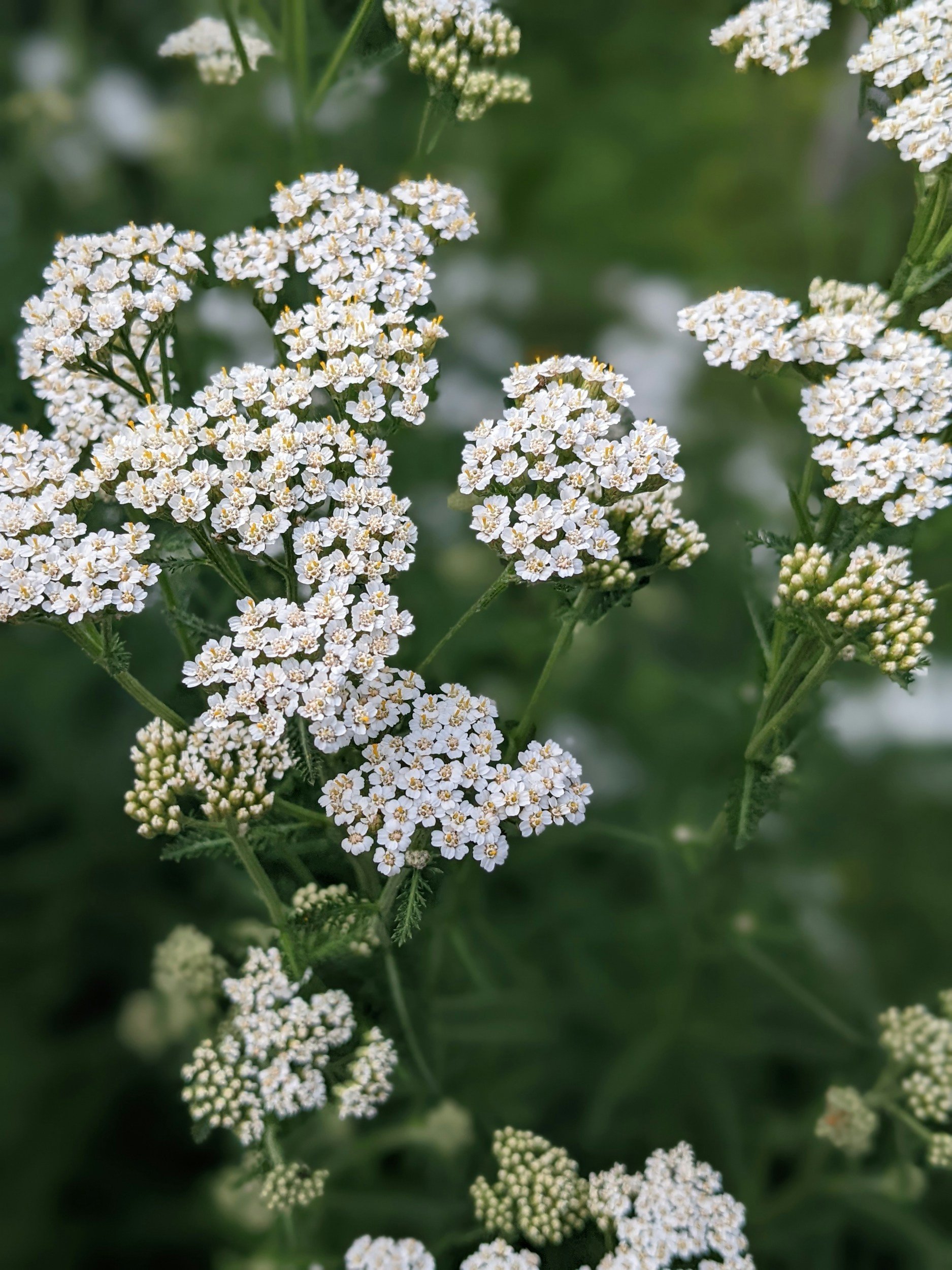
Common Yarrow (Achillea millefolium)
"A true force medicinally, and a great friend to a diverse set of pollinators." — Jenelle
Woolly Sunflower (Eriophyllum lanatum)
Cheerful, silver-foliaged native perennial; very drought tolerant.
Mexican Feather Grass (Stipa tenuissima)
"Airy and lush, it adds movement in the garden. Can wander, but shouldn’t in an uncreated setting" — Jenelle
Creeping Thyme (Thymus serplum 'Elfin')
Exceptional between flagstone; tight form relative to other thymes; prolific with pollinators when blooming.
Nootka Rose (Rosa nutkana)
Our native rose; simple, fragrant pink blooms; excellent wildlife habitat.
Russian Sage (Perovskia atriplicifolia)
"Very useful for the back of a border. An airy form that looks good well past blooming." — Jenelle
Broad-leaved Stonecrop (Sedum spathulifolium)
Mat-forming native succulent; year-round structural interest.
-
September through October — Late-season bloomers are critical for pollinators building their winter stores.
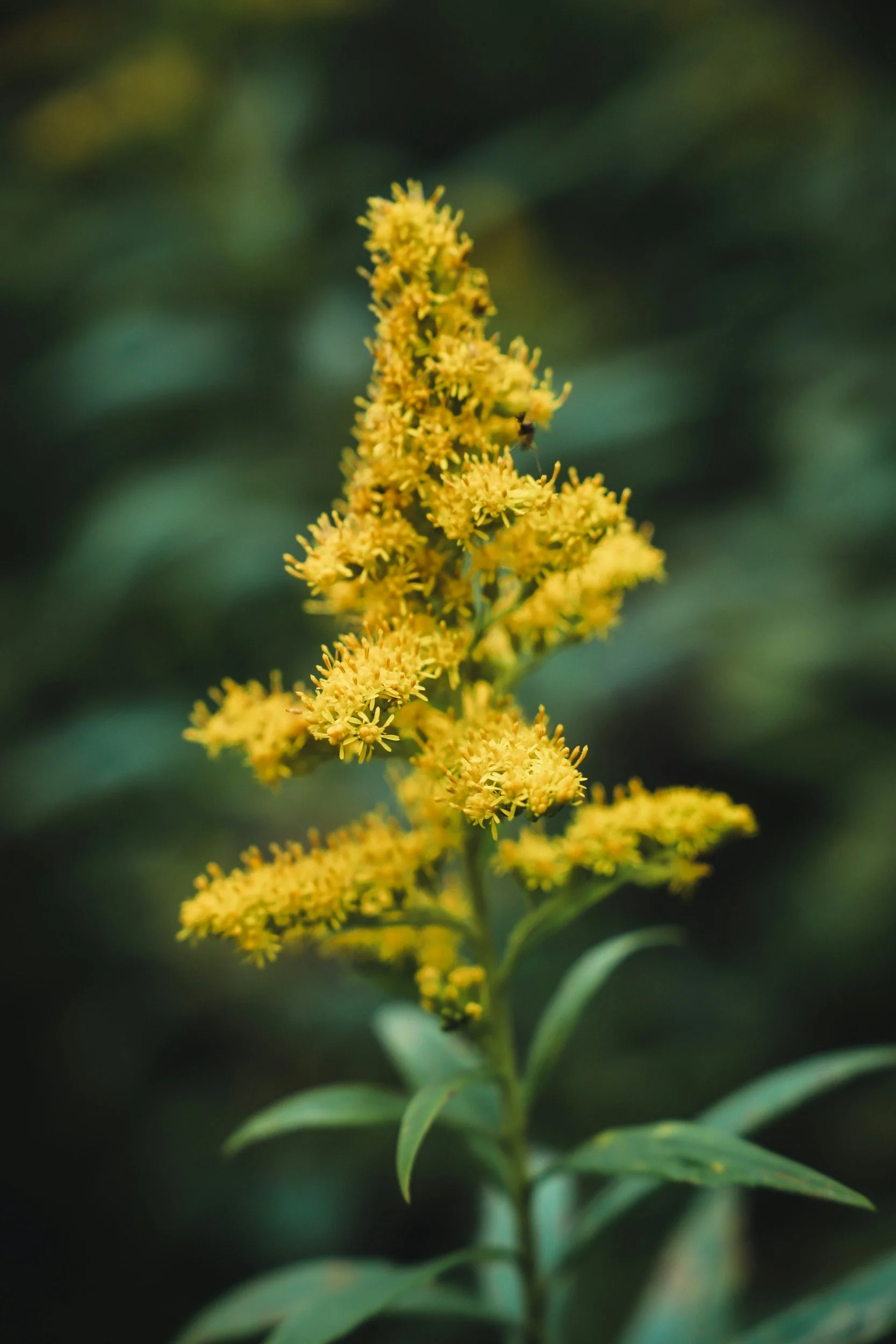
Canada Goldenrod (Solidago lepida)
Few natives feed as many insects; draws bees, wasps, beetles, and butterflies in remarkable late-season numbers.
Douglas' Aster (Symphyotrichum)
Blooms when little else does; violet-rayed flowers bees and butterflies depend on before winter. Watch for this one spreading
Autumn Joy (Sedum spectabile)
Fades beautifully from pink to copper; late nectar and winter seed heads for birds.
Pearly Everlasting (Anaphalis margaritacea)
Papery white clusters; specialist host plant for American Painted Lady butterflies.
Coastal Mugwort (Artemisia suksdorfii)
Fragrant native herb with striking silver foliage; shelters overwintering insects.
Our approach to plants —
Is it a good
neighbour?
There's a lively conversation in ecological restoration about the perception of native and non-native plants. Native plants are generally preferable as they have co-evolved relationships with local insects, birds, and fungi that non-natives can't replicate, and many pollinators depend on specific native species to complete their life cycles.
That said, well-chosen non-native, non-invasive plants have a role to play in urban gardens: they can extend the bloom season, tolerate difficult conditions, and fill gaps where natives struggle to establish.
The question we return to in moments of doubt is not "Is it native?" but "Will it be a good neighbour?" — borrowing the concept from Robin Wall Kimmerer's Braiding Sweetgrass.
The Spring Road & Princess Avenue garden is anchored by a native backbone of camas, yarrow, goldenrod, aster, Oregon-grape, stonecrop, paired with non-native companions including lavender, salvia, creeping thyme, and perovskia, chosen for their long bloom periods, drought resilience, and genuine value to pollinators.
This isn't a compromise. It's a design philosophy grounded in reciprocity. An idea shared by Indigenous plant knowledge holders and restoration ecologists alike, that stewardship is about relationship: observing how plants change with the seasons, noticing what they give and what they take, and making choices rooted in that ongoing attention rather than static rules.
What we avoid entirely
— Plants known to be invasive in this region
— Any use of pesticides or herbicides
— Species with no meaningful wildlife value
— Species without demonstrated drought resiliency
A note on plant origin
Ecologists and restoration practitioners have increasingly moved away from rigid origin-based rules toward asking what a plant actually does in context: how it behaves, what it supports, and whether it belongs to the place it's been asked to grow in. Our experience as horticulturists working across Greater Victoria supports this view. In a dense urban environment with altered soils, this framing is what makes the difference between a garden that thrives and one that struggles. A plant that performs beautifully in a restoration meadow may fail entirely on a compacted boulevard. Context is everything.
Habitat and nesting —
Beyond
the blooms.
Pollinators need places to nest, overwinter, and raise their young. The vast majority of BC's native bees are solitary, and their nesting needs vary.
Ground nesters
Around 70% of native bee species nest in the ground in small burrows dug into bare, well-drained soil. Mining bees and sweat bees are the most common ground nesters on Vancouver Island. Pockets of exposed soil in this garden are left as intentional habitat.
Bunchgrasses as habitat
Roemer's Fescue adds texture all year. The dense base of its tussock provides shelter for overwintering insects, including butterfly pupae. Coastal mugwort plays a similar role with dense foliage supporting larval stages of several moth species.
Cavity nesters
The remaining 30% of native bees are cavity nesters, forming chambers in hollow stems, holes in dead wood, or other small openings. Pollinator houses can support mason bees and leafcutter bees who nest this way, but they require cleaning every 1-2 years.
Hummingbirds
The Anna's Hummingbird is now increasingly year-round in Greater Victoria, nesting in trees and tall shrubs from plant fibres and spider silk. Tubular blooms support them across the seasons, from Nootka Rose in summer to the hot lips salvia through fall.
Stem nesters
Stem-nesting bees lay their eggs inside hollow or pithy plant stems and overwinter there through the cold months. The stalks of yarrow, goldenrod, and aster in this garden are left standing until early spring for exactly this reason.
✕
No pesticides — This garden is free of neonicotinoids, which spread through every part of a treated plant and disrupt bees' immune systems even at low doses.
Make your own —
Step-by-step
guide to your garden.
A two-metre strip of boulevard, a neglected corner of your front yard, or even containers on a balcony, any of these can become meaningful pollinator habitat. Here's how to start your sunny pollinator-friendly, deer and drought-resilient garden.
Step 01 —
Check your local guidelines
Before you begin, check whether boulevard gardening is permitted in your municipality. Rules vary across the region. In Victoria, the City actively encourages it and has published guidelines for public safety. If your project will be visible to neighbours, a quick conversation goes a long way.
Beloved native plants to anchor your garden and maintain millennia-old relationships with native bees
Achillea millefolium, Common Yarrow — tough, long-blooming, adored by a wide range of pollinators
Camassia quamash, Common Camas — plant bulbs in fall for spectacular spring blooms
Mahonia aquifolium, Oregon-grape — evergreen structure, early-season pollen, edible berries
Solidago lepida, Canada Goldenrod — essential for fall pollinators; beautiful in seed
Eriophyllum lanatum, Woolly Sunflower — cheerful, silver-foliaged, very drought tolerant
Festuca roemeri, Roemer's Fescue — movement, texture, and habitat in one
Anaphalis margaritacea, Pearly Everlasting — specialist host for painted lady butterflies
Allium cernuum, Nodding Onion — graceful native with a long bloom period
Step 04 —
Prepare the site
Our boulevard was prepared by removing weeds and bullies plants by hand, then sheet mulching. Sheet mulching is the technique of laying cardboard directly over the soil and topping it with a generous layer of mulch. It suppresses weeds, retains moisture, and the cardboard breaks down into the soil over winter. Keep in mind that your soil holds a seed bank below the surface, so some weeding will be necessary as your planting establishes. If you know you’ll drop the ball on watering in the early stages, consider laying drip irrigation or a soaker hose under the cardboard.
Step 03 —
Choose plants you love
The plants below keep showing up in our designs for a reason. They're well adapted to sunny, dry boulevards, and they provide food and shelter for pollinators. They’re also simply stunning plants that we love for all kinds of reasons. Choose plants that, together, have year-round value to pollinators and to yourself.
Step 02 —
Assess your space
How much sun does the space get? Is there access to water? What's already growing? What’s worth keeping? What pollinator foraging and nesting resources are available nearby, and what's missing? Ask yourself what will make this garden interesting and meaningful to you - build something you'll want to care for. Talk to your neighbours too: they may have seeds to share, or useful knowledge about what thrives nearby.
Our favourite pollinator-friendly companions
Lavandula 'Hidcote', Lavender — offers much, asks for little; prune annually to keep its form
Salvia nemorosa 'Caradonna' — long-blooming, dark-stemmed, irresistible to bees
Thymus serpyllum 'Elfin', Creeping Thyme — plant between flagstone; fills in beautifully
Perovskia atriplicifolia, Russian Sage — airy structure, excellent late bloom, drought hardy
Nepeta 'Walker's Low', Catmint — reliable, long-blooming, loved by bumblebees
Helianthemum 'Ben Ledi', Rock Rose — low, drought-hardy, and covered in small rose-pink blooms that bees love
Salvia 'Hot Lips'— two-tone blooms that hummingbirds find irresistible
Step 05 —
Water well at the beginning
Drought-tolerant doesn't mean water-free. Every plant in this garden needs regular irrigation through its first two or three seasons while its root system establishes. Drip irrigation under the mulch layer is ideal as it delivers water directly to the root zone and dramatically reduces evaporation compared to hand watering.
Once established, these drought-tolerant plants should manage on Victoria's natural rainfall pattern of wet winters, dry summers with little to no supplemental irrigation.
Step 06 —
Embrace the wild look
Boulevard gardens sometimes make neighbours nervous before they understand what they're looking at. A small sign identifying the garden as a pollinator habitat goes a long way. Leaving seed heads through winter looks unfinished to some eyes, but once you understand the purpose, it’s gorgeous.
Caring for the garden —
Low maintenance
doesn't mean
no maintenance.
Ecologically diverse gardens are genuinely easier to care for than conventional lawns, but they do ask something of you, especially in the early years.
-
The biggest task in a new garden. Invasive grasses like speargrass and couchgrass are persistent and they will push back. Hand-weeding is the best approach. Do it early and regularly in spring. Sheet mulch buys you time, but as long as seeds exist in the soil bank, they will return.
-
Drought-tolerant doesn't mean water-free, particularly in the first two to three seasons while root systems are establishing.
Water deeply and infrequently to encourage roots to grow downward, building the resilience that makes these plants truly drought-tolerant over time. Frequent shallow watering does the opposite, keeping roots near the surface and creating dependency
To know when to water, push a finger a few centimetres into the soil near the base of a plant. If it's dry at that depth, water. If it's cool and slightly moist, hold off.
On dry or compacted soil, water applied too quickly will run off the surface before it can be absorbed, you'll see it pooling or moving sideways rather than soaking in. Water slowly, or in two passes with a short break in between, to give the soil time to receive it. A layer of mulch helps significantly by slowing evaporation and improving absorption. Drip irrigation or soaker hoses set on a slow, long cycle is ideal for the same reason.
-
Most perennials in this garden benefit from a light cut-back in late winter or early spring but not too early, and not too severe. Leaving stalks and seed heads through the winter months provides overwintering habitat for insects and food for birds.
Lavender is the exception: prune it annually, ideally after flowering or in early spring, cutting back right below the flower stalk and never into hardwood in a mounding shape. Without this, lavender becomes woody and open in the centre and loses its beautiful mounding form.
-
Adaptive management is a core principle of ecological restoration. It’s the practice of observing a system over time, interpreting what you see, and adjusting your approach accordingly. It's how good stewardship works.
In a garden, this means paying attention across seasons: noticing which plants are thriving and which are struggling, which pollinators are visiting and when, where weeds are returning or bare soil is appearing. It means being willing to remove a plant that isn't performing, try something new, or simply wait and see. The garden is always giving you information. Adaptive management is the commitment to act on it.
This is also how the Spring & Princess boulevard will continue to evolve — through ongoing monitoring of species establishment, pollinator activity, and seasonal changes, with each observation informing the next round of care. A new garden becomes habitat through this kind of sustained, attentive care and partnership between the plants and you, the gardener.
Further reading —
Want to go deeper?
Guide
Selecting Plants for Pollinators — Eastern Vancouver Island
Pollinator Partnership Canada
Resource
Pollinators of Greater Victoria
Habitat Acquisition Trust (HAT)
Guide
Pollinator-Friendly Plants for Southern Vancouver Island
Satinflower Nurseries
Guide
Habitat Assessment Guide for Pollinators in Yards, Parks, and Gardens
Xerces Society
Resource
Public Education & Gardening Resources
Compost Education Centre
Resource
Plant Reference Database
Stellata Plants
Guide
Habitat Assessment Guide for Pollinators in Yards, Parks, and Gardens
Xerces Society
News
How 'Parks for Bugs' Boost Pollinators in Vancouver
UBC News · 2025
Tool
Find an Invasive Species
Invasive Species Council of BC